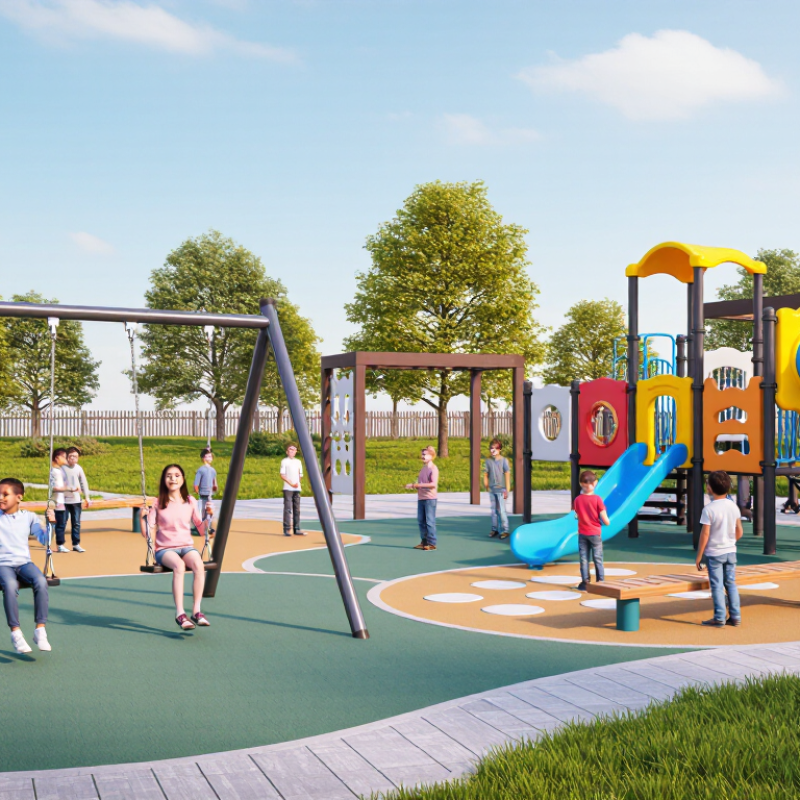
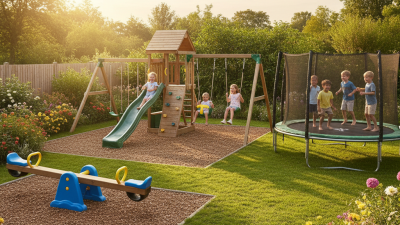
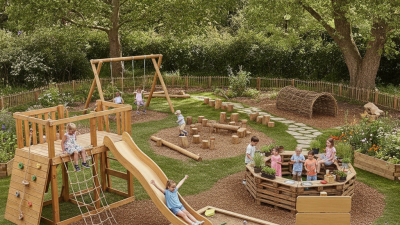
Outdoor Playing Equipment refers to fixed or movable structures designed for children’s active, social, and imaginative play. It includes swings, slides, climbing frames, balance beams, sensory panels, and inclusive play systems. These products do more than fill a park. They shape how children climb, cooperate, test balance, and manage small risks. The World Health Organization recommends at least 60 minutes of moderate-to-vigorous physical activity daily for children and adolescents aged 5 to 17. Well-planned outdoor spaces can support that goal through movement that feels like play, not exercise.
Safety is measurable. The U.S. Consumer Product Safety Commission reports more than 200,000 playground-related injuries treated in American emergency departments each year, with falls representing the largest share. Its Public Playground Safety Handbook highlights protective surfacing, entrapment prevention, guardrails, maintenance, and age-appropriate design. ASTM F1487 and EN 1176 also provide widely referenced technical frameworks, although requirements may differ by location. Designers and buyers should verify local standards before installation.
Experience still matters. A swing may look secure, yet loose fasteners can create danger after months of weather exposure. A rubber surface may reduce impact, but poor drainage can make it slippery. That detail is easy to miss. The strongest approach combines tested materials, accessible layouts, regular inspections, and clear supervision guidance. No design is perfect. However, reliable Outdoor Playing Equipment can create active spaces that are safer, more inclusive, and genuinely inviting for everyday use. Industry data supports investment, but careful observation keeps the product honest.
Outdoor playing equipment refers to fixed or movable structures designed for children’s physical play outside. It includes swings, slides, climbing frames, balance beams, spring riders, and low obstacle features. Its purpose is broader than entertainment. Well-designed equipment supports balance, coordination, strength, spatial awareness, and social interaction. A child grips a rope, shifts weight across a platform, and learns to judge height through direct experience.
Safety is central to this definition. The U.S. Consumer Product Safety Commission reports that about 200,000 children receive emergency treatment for playground equipment-related injuries each year in the United States. Its Public Playground Safety Handbook identifies falls as a major injury source and recommends protective surfacing, safe fall zones, and regular inspection. These details show why equipment must be planned around realistic movement, not appearance alone. A colorful structure may still create dangerous gaps, hard landing areas, or poor visibility.
The purpose also changes with age and ability. Younger children need lower platforms, stable handholds, and gentle slopes. Older users may benefit from climbing challenges and varied routes. The National Program for Playground Safety emphasizes supervision, maintenance, and developmentally appropriate design in its safety guidance. However, no design removes every risk. That is worth admitting. Responsible operators should record wear, loose fasteners, sharp edges, and drainage problems during routine checks. Outdoor play works best when challenge and protection remain carefully balanced.
| Equipment Category | Definition | Common Examples | Primary Purpose | Main Developmental Benefits | Typical Materials |
|---|---|---|---|---|---|
| Climbing Equipment | Structures designed for children to climb vertically or across elevated surfaces. | Climbing walls, cargo nets, climbing frames, and ladders. | To provide active challenge and opportunities for climbing play. | Upper-body strength, balance, coordination, grip control, and confidence. | Galvanized steel, treated timber, rope, plastic, and impact-resistant panels. |
| Sliding Equipment | Inclined surfaces that allow children to move from a higher platform to a lower landing area. | Straight slides, wave slides, and enclosed slides. | To support enjoyable movement and controlled descent. | Body awareness, balance, spatial understanding, and turn-taking. | Molded plastic, stainless steel, fiberglass, and powder-coated metal. |
| Swinging Equipment | Suspended seats or platforms that move backward and forward from a supporting frame. | Belt swings, bucket swings, accessible platform swings, and tire-style swings. | To provide rhythmic movement and active outdoor enjoyment. | Core stability, leg strength, balance, rhythm, and body control. | Steel frames, flexible polymer seats, synthetic chains, and rubber components. |
| Balancing Equipment | Low-height structures that require users to maintain stability while walking or moving across them. | Balance beams, stepping pods, wobble bridges, and balance logs. | To create manageable physical challenges and movement practice. | Postural control, coordination, concentration, and gross motor skills. | Recycled plastic, treated wood, rubber, and corrosion-resistant metal. |
| Spinning Equipment | Play structures that rotate around a central point or axis when pushed or operated by users. | Rotating bowls, merry-go-rounds, and spinner seats. | To provide rotational movement and cooperative play opportunities. | Spatial awareness, balance, coordination, cooperation, and self-regulation. | Powder-coated steel, molded plastic, rubber surfacing, and sealed bearings. |
| Rocking and Spring Equipment | Small play units that move back and forth or flex when a child shifts body weight. | Spring riders, rocking animals, and seesaws. | To encourage controlled movement and imaginative role play. | Balance, coordination, leg strength, cooperation, and imaginative thinking. | Molded plastic, steel springs, coated metal, timber, and rubber grips. |
| Imaginative and Social Play Equipment | Play structures that represent familiar environments or support shared pretend-play activities. | Playhouses, forts, role-play panels, and outdoor kitchens. | To encourage creative expression, communication, and cooperative play. | Language development, problem-solving, social skills, and creativity. | Weather-resistant plastic, treated wood, composite panels, and metal fittings. |
| Sports and Activity Equipment | Outdoor items used for structured physical games, exercise, or skill-based activities. | Ball courts, goal frames, climbing ropes, activity markers, and outdoor fitness stations. | To support physical exercise, organized games, and active recreation. | Endurance, agility, strength, teamwork, and motor-skill development. | Steel, synthetic turf, rubber, sports-grade plastic, and sealed composite materials. |
| Sensory and Nature Play Equipment | Outdoor features that engage touch, sound, sight, movement, or interaction with natural materials. | Sand tables, musical panels, water channels, sensory gardens, and textured paths. | To provide exploratory learning and multisensory experiences. | Curiosity, fine motor skills, sensory awareness, communication, and early problem-solving. | Natural stone, timber, stainless steel, food-safe plastic, and rubber. |
| Safety Surfacing | Protective ground covering installed beneath and around play equipment to help reduce injury severity during falls. | Engineered wood fiber, loose-fill rubber, poured-in-place rubber, and rubber tiles. | To provide impact attenuation and define safer play zones. | Supports safer movement, confidence, and accessibility when properly designed and maintained. | Wood fiber, recycled rubber, synthetic binders, sand, and engineered aggregate. |
What Is Outdoor Playing Equipment?
Main Types of Outdoor Playing Equipment
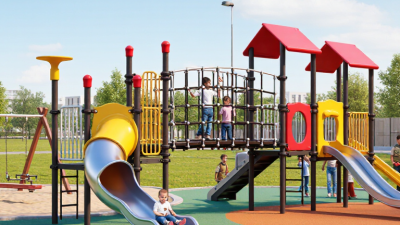
Outdoor playing equipment includes fixed structures and movable items designed for active outdoor play. The main types are swings, slides, climbing frames, seesaws, and balance equipment. Swings develop rhythm and body control. Slides offer speed, height, and a simple lesson in turn-taking. Climbing frames build grip strength, coordination, and confidence. Balance beams add challenge through careful foot placement. Small details matter, too. Rounded edges, stable platforms, shaded surfaces, and visible supervision areas can improve everyday use.
Inclusive equipment supports children with different physical and sensory needs. It may include wide ramps, transfer platforms, quiet activity panels, and ground-level play features. Natural play areas use logs, stones, sand, and planting zones. These spaces feel less predictable, which can encourage creative movement. Outdoor fitness equipment serves older children and adults through step platforms, stretching stations, and bodyweight structures. A mixed layout usually works better than one crowded structure.
The U.S. Consumer Product Safety Commission reports over 200,000 playground-related emergency-department injuries among children each year. Its Public Playground Safety Handbook identifies falls as the leading injury pattern. That evidence makes impact-absorbing surfacing and equipment spacing essential. Grand View Research valued the global playground equipment market at about 5.3 billion U.S. dollars in 2023. The report also forecasts continued growth through 2030. Yet market growth does not guarantee good design. Some installations still prioritize appearance over supervision, accessibility, or heat control. That deserves more careful review.
Outdoor playing equipment includes swings, slides, climbing frames, balance beams, and sensory panels. Its materials and design features affect safety, comfort, durability, and inclusion. Galvanized steel supports heavy use and resists rust, while aluminum reduces weight. High-density polyethylene panels resist moisture and splintering. Timber feels warmer and more natural, but it needs regular inspection for cracks, rot, and loose fasteners. Recycled plastic can lower maintenance, although its surface may become very hot under direct sunlight.
Design quality depends on details that children may never notice. The U.S. Consumer Product Safety Commission reports about 200,000 playground-related emergency department injuries each year. Its Public Playground Safety Handbook emphasizes protective surfacing, fall zones, guardrails, and safe openings. Rubber tiles, engineered wood fiber, or poured-in-place surfacing can soften falls, but poor drainage can create hidden problems. The World Health Organization recommends at least 60 minutes of moderate-to-vigorous activity daily for children and adolescents. Equipment should support climbing, balancing, swinging, and imaginative movement, not only fast sliding.
Tips: Check surface temperature before opening the play area. Use shade, rounded edges, visible sightlines, and age-appropriate challenge levels. Keep accessible routes firm and continuous. Inspect bolts, welds, chains, and drainage after storms. No material is perfect; even attractive designs can fail when maintenance is ignored. ASTM F1487 and relevant local standards should guide final specifications.
Outdoor playing equipment includes swings, slides, climbing frames, balance beams, and sensory play structures. Safe equipment should match a child’s age, size, strength, and ability. It also needs stable foundations, rounded edges, secure fasteners, and surfaces that reduce injury risks. Safety requirements may differ by location, so owners should follow current local standards and professional inspection guidance.
A careful inspection checks loose bolts, cracked plastic, sharp edges, rust, trapped clothing points, and damaged protective surfacing. Wood should not splinter, while ropes should remain tightly secured. The fall zone must stay clear of benches, stones, bags, and bicycles. Children should use equipment as intended, not climb over barriers or push others near moving parts. I have noticed that small maintenance issues are often ignored because the equipment still looks usable. That judgment can be wrong.
Tips: Match equipment to the posted age range. Keep active supervision nearby. Teach children to wait their turn and hold handrails. Check the ground after heavy rain or freezing weather. Remove unsafe equipment from use until a qualified person repairs it. Supervisors should also watch for overcrowding, wet surfaces, and unsuitable clothing, such as loose cords. A brief daily check may prevent a serious incident. It is not perfect, but consistency matters.
What Is Outdoor Playing Equipment?
Benefits for Children’s Growth and Development
Outdoor playing equipment includes slides, swings, climbing frames, balance beams, and sensory play structures. It turns open space into active learning. Children push, pull, climb, hang, jump, and negotiate turns. These actions strengthen muscles, balance, planning, and coordination. A safe structure also gives children meaningful choices.
The World Health Organization’s 2019 guidelines recommend 180 minutes of daily activity for children aged three to four. At least 60 minutes should be moderate to vigorous. For ages five to seventeen, WHO recommends an average of 60 active minutes daily. However, the U.S. Centers for Disease Control and Prevention reported in its 2019 Youth Risk Behavior Survey that only about one in four high school students met this target. Equipment cannot solve inactivity alone. It can make movement easier to begin.
A climbing frame may build confidence after repeated attempts. A low balance beam supports focus, body awareness, and careful risk assessment. Shared play also develops language, patience, and conflict repair. Adults should inspect surfaces, fall zones, fasteners, and age suitability. Supervision still matters. A slide teaches no empathy by itself. Children need time, space, and supportive adults. Some designs look exciting but offer little movement variety. That mistake is easy to miss. Good planning allows imagination, quiet recovery, and imperfect attempts.
Outdoor playing equipment includes structures such as swings, slides, climbing frames, and balance elements. These features create opportunities for children to run, climb, balance, coordinate movements, and play socially.
Global context: In 2016, approximately 81% of school-going adolescents aged 11–17 did not meet the recommended level of daily physical activity. Accessible outdoor play spaces can provide more opportunities for active movement and help children work toward the guideline of at least 60 minutes of moderate-to-vigorous physical activity each day.
Source: World Health Organization, Global action plan on physical activity 2018–2030.