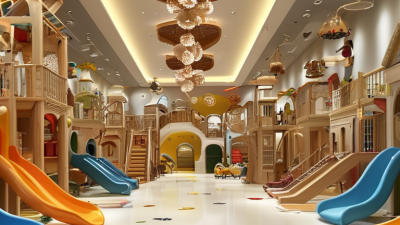
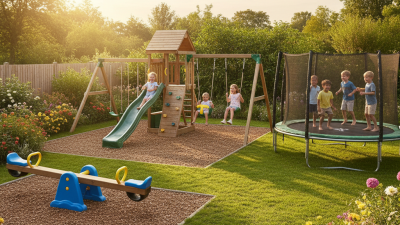
China Top Soft Playground Equipment Suppliers?
China Top Soft Playground Equipment Suppliers? That question deserves more than a factory list. Buyers need evidence about safety, materials, production experience, and after-sales support.
Grand View Research’s 2024 playground equipment market analysis identifies commercial and indoor play spaces as important growth segments. IMARC Group’s 2024 industry review also highlights customization, modular design, and safety-focused manufacturing. However, these reports use different market definitions. Their figures should guide research, not replace supplier verification.
Soft Playground Equipment should be evaluated through measurable details. Ask for material specifications, foam density, fabric performance, load testing, cleaning procedures, and installation records. Request recent project photos, factory videos, and independent inspection documents. Check whether designs address blind corners, exposed fasteners, entrapment risks, and emergency access. A colorful ball pit is not automatically a safe one.
Dr. Joe Frost, a leading play scholar and professor emeritus at the University of Texas, wrote, “Play is the business of childhood.” His observation remains practical for commercial buyers. Equipment must support movement, imagination, social interaction, and manageable risk. It should also survive daily use by energetic children.
The strongest Chinese suppliers usually combine engineering teams, controlled production, export experience, and responsive communication. Yet “top” is not universal. A hotel may need compact modular units, while a family entertainment center needs higher capacity and easier replacement.
There is no perfect supplier. Even attractive certifications require careful checking. This guide compares China’s leading Soft Playground Equipment suppliers through documentation, design capability, manufacturing consistency, safety awareness, and real customer evidence. Reports offer direction. Site-level proof matters more.
What Is Soft Playground Equipment?
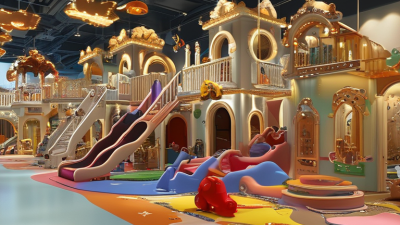
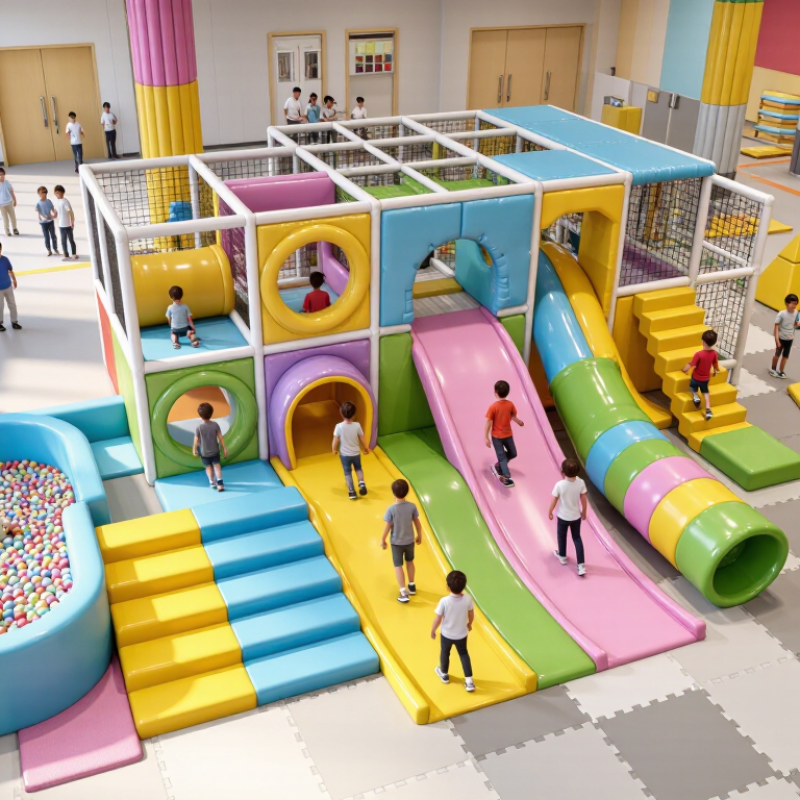
Soft playground equipment is indoor or outdoor play equipment designed with cushioned materials. It may include padded climbing walls, tunnels, ramps, ball pits, bridges, and low platforms. Foam cores, coated vinyl, and flexible covers help reduce sharp contact points during active play. Children can crawl, climb, balance, and explore without facing hard metal edges everywhere.
The term “soft” can mislead. Not every padded surface offers the same protection. A reliable design needs stable foundations, securely closed seams, suitable foam density, and smooth, washable coverings. During a practical inspection, check for exposed fasteners, loose panels, trapped moisture, and damaged stitching. These small defects can become bigger maintenance problems. Equipment should also match children’s ages, heights, and movement abilities. A toddler area needs different slopes and barriers than a space for older children.
Buyers should request material specifications, installation guidance, cleaning instructions, and inspection records from suppliers. Ask how the equipment performs after repeated use, not only how attractive it looks when new. Good documentation supports safer decisions and easier maintenance. Regular checks should examine padding, connections, flooring, and ventilation around enclosed sections. No design is perfect. Even durable equipment can fail when overloaded, poorly installed, or cleaned with unsuitable chemicals. That practical weakness deserves honest attention.
Why Choose Chinese Soft Playground Equipment Suppliers?
Chinese soft playground equipment suppliers are attractive because they combine manufacturing scale with flexible customization. Grand View Research’s 2024 Playground Equipment Market report estimates the global market at more than US$5 billion in 2023, with annual growth of about 6% through 2030. This demand encourages Chinese factories to improve foam cutting, PVC welding, padding, and modular design. Buyers can often request themed shapes, adjusted platform heights, private-label colors, and replacement components. That matters when a venue has an awkward corner or limited ceiling height. The factory floor tells a clearer story than a polished brochure.
Cost is another practical reason. China’s mature supply chain connects foam, coated fabric, fasteners, printing, and packing services in one production network. This can reduce coordination time and support competitive quotations. However, low price is not proof of value. I would inspect foam density, seam strength, edge protection, fire-performance documentation, and cleaning instructions before ordering. ASTM F1918 and EN 1176 provide useful reference points, but compliance depends on the final design and destination market. Third-party inspection is worth the expense.
Allied Market Research has projected strong growth for indoor playground equipment, supported by family entertainment and commercial leisure investment. Chinese suppliers also serve many export markets, giving experienced teams familiarity with drawings, container loading, and installation manuals. Still, communication can fail over small details. A missing measurement may change the entire layout. Use approved drawings, sample testing, photo records, and staged payments. The process is efficient, but not automatic.
How to Evaluate China’s Leading Suppliers
China Top Soft Playground Equipment Suppliers?
Evaluating China’s leading soft playground equipment suppliers requires more than comparing online catalogs. Ask how long they have produced playgrounds and which markets they serve. Request factory videos, material specifications, load tests, fire-performance documents, and installation drawings. A trustworthy supplier explains foam density, PVC thickness, stitching methods, edge protection, and cleaning requirements clearly. Vague answers are useful warnings.
Experience becomes visible during sampling. Order a small sample or inspect a finished project through an independent visit. Check seams under tension, foam recovery, zipper placement, odor, color consistency, and climbing-panel stability. Ask for batch records and a documented inspection plan. Confirm that designs match safety standards in your destination market. Never accept a certificate without checking its issuer, scope, and date. Price matters, but an unusually low quote may hide thinner padding or weaker hardware. Attractive samples can still lose shape after repeated use. One inspection is never enough.
Tips: Compare at least three written quotations. Ask about replacement parts, warranty limits, production time, and payment milestones. Keep every drawing and approved sample in the contract. A video call helps, but it cannot replace physical verification.
Key Products and Customization Options
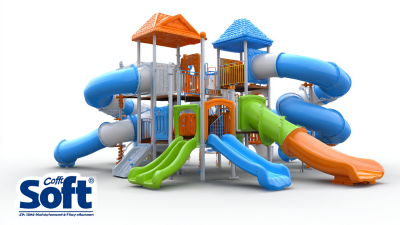
When evaluating China’s top soft playground equipment suppliers, product range matters less than practical customization. A capable supplier should offer modular climbing walls, ball pools, crawl tunnels, foam obstacles, slides, and padded platforms. Each component needs clear dimensions, material details, and maintenance guidance. Fit matters. A compact indoor venue may need a two-level layout, while a family entertainment center may require wider circulation and separate toddler zones. Experienced suppliers usually request floor plans, ceiling height, age groups, and expected daily traffic before quoting.
Customization can include colors, themes, logo placement, obstacle difficulty, and accessibility features. High-density foam, reinforced PVC, washable surfaces, and concealed fasteners support repeated use. Ask for sample swatches and joint photographs, not only attractive renderings. A useful technical file should state foam density, fabric thickness, fire-performance documentation where applicable, load guidance, cleaning methods, and replacement-part availability. Suppliers should also explain installation tolerances and inspection procedures. Vague promises create expensive surprises.
One planning mistake is treating appearance as the main quality test. Bright colors cannot compensate for sharp transitions, poor visibility, or difficult cleaning. I would review a prototype, even a small section, before approving full production. It reveals problems early. In project reviews, some layouts looked impressive but narrowed staff sightlines. That detail was missed on paper. Independent inspection, factory communication, and written change control improve reliability. Still, customization has limits; unusual shapes may increase cost, production time, and future repair difficulty. A practical design often serves children better than a complicated one.
Safety Standards, Pricing, and Export Services
China’s strongest soft playground equipment suppliers compete through safety control, not colorful designs alone. The U.S. Consumer Product Safety Commission reports about 200,000 emergency-department playground injuries annually. That figure makes impact protection essential. Buyers should request test reports covering EN 1176, ASTM F1918, flame resistance, foam density, and surface durability. Certificates without product-specific test numbers are weak evidence.
Pricing varies with size, foam thickness, PVC grade, and custom obstacles. A compact indoor unit may cost roughly USD 3,000–8,000, while a large commercial installation can exceed USD 30,000. Grand View Research estimated the global indoor playground equipment market at approximately USD 2.8 billion in 2023, with continued growth expected through 2030. Demand is rising, but low quotes deserve careful review. Some suppliers reduce costs through thinner padding or fewer replacement parts. That is not always visible in a digital quotation.
Export service should include measured drawings, packing lists, installation guides, spare PVC covers, and clear Incoterms. Experienced suppliers can arrange pre-shipment inspections and provide loading photos before dispatch. Confirm carton dimensions early; oversized soft modules can increase freight costs sharply. Ask whether the supplier supports replacement panels after installation. This detail matters. I would also request a sample corner and stitching inspection, because catalog photos cannot reveal weak seams. Documentation may still be imperfect, so buyers should independently verify laboratories, certificates, and local installation requirements.

 CONTACT NUMBER
 CONTACT NUMBER
 CONTACT NUMBER