2025 Top 10 Garden Playing Equipment Trends That Boost Child Development Skills
In recent years, the significance of outdoor play has gained considerable attention from educators, parents, and child development specialists alike. The importance of Garden Playing Equipment in fostering essential skills in children is backed by various research studies. According to the American Academy of Pediatrics, outdoor play not only enhances physical health but also contributes to cognitive and emotional development. In fact, children who engage in regular outdoor play demonstrate improved concentration, creativity, and problem-solving abilities, which are crucial for their overall development.

As we approach 2025, the trends in Garden Playing Equipment are evolving to meet the growing demands for promoting holistic child development. Reports from the International Playground Equipment Manufacturers Association indicate a surge in innovative designs that focus on accessibility and inclusiveness, ensuring children of all abilities can benefit. Furthermore, eco-friendly materials and nature-inspired elements are becoming increasingly popular, responding to both parents' desire for sustainability and the children's inherent connection to nature. This comprehensive approach not only supports physical fitness but also encourages social interaction and emotional resilience, making Garden Playing Equipment a crucial aspect of modern childhood.
Exploring the Role of Outdoor Play Equipment in Enhancing Cognitive Development in Children
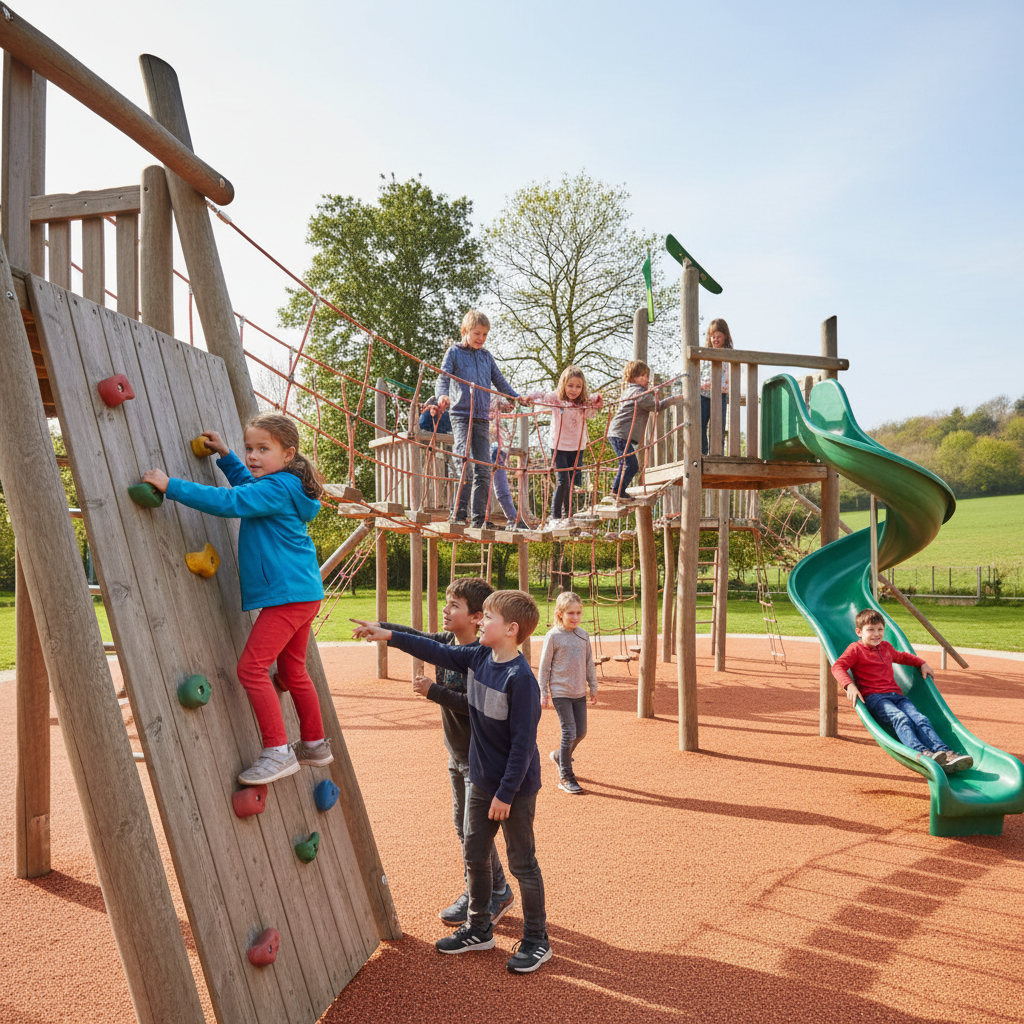
Outdoor play equipment plays a crucial role in enhancing children's cognitive development. Engaging in activities such as climbing, sliding, and jumping not only promotes physical health but also stimulates brain function. As children navigate playground structures, they face challenges that encourage problem-solving, critical thinking, and spatial awareness. For instance, deciding the best route to scale a climbing wall requires kids to assess distances and potential risks, fostering their decision-making abilities.
Moreover, outdoor play encourages social interaction among peers, which is essential for cognitive growth. When children engage in cooperative games or share equipment, they learn vital communication skills and emotional intelligence. These interactions help them understand social dynamics, negotiate roles, and develop empathy, further enriching their cognitive and emotional landscape. By fostering creativity and imaginative play, outdoor playgrounds provide an invaluable context for children to explore and expand their minds, blending physical activity with essential learning experiences.
Understanding How Interactive Garden Play Spaces Foster Social Skills and Emotional Intelligence
Interactive garden play spaces are crucial for fostering social skills and emotional intelligence in children. Research indicates that play in natural environments enhances cooperative behaviors among peers. According to a study by the American Academy of Pediatrics, children who engage in unstructured outdoor play are more likely to develop essential social competencies, as they learn to navigate relationships through shared experiences and conflict resolution. Such interactions encourage empathy and enhance communication skills, allowing children to express their feelings and understand others better.
Furthermore, green play spaces provide opportunities for children to engage in imaginative play, which is vital for emotional development. The National Association for the Education of Young Children highlights that imaginative play can lead to increased emotional regulation and resilience. By creating scenarios in a garden setting, children practice managing their emotions while collaborating with others. Data from the Outdoor Foundation also reveals that kids who play in natural settings tend to be more socially adept, showcasing the profound impact that garden environments have on childhood development. In this way, interactive garden play not only supports physical health but also nurtures critical interpersonal skills that are essential for lifelong success.
2025 Top 10 Garden Playing Equipment Trends That Boost Child Development Skills
This bar chart illustrates the engagement levels of different garden playing equipment trends that are predicted to enhance child development skills by 2025. The metrics reflect how these engaging spaces foster social skills and emotional intelligence among children.
Evaluating the Impact of Nature-Inspired Play Structures on Physical Health and Motor Skills
Nature-inspired play structures are gaining popularity for their role in enhancing physical health and motor skills in children. These designs incorporate natural elements like logs, rocks, and plants, encouraging kids to engage with their environment in a dynamic way. Climbing over a log or balancing on a log bridge not only challenges their physical abilities but also helps develop essential motor skills such as coordination and balance. As children navigate these structures, they experience a range of movements that promote strength and agility, vital for their overall development.
Tips: To make the most of nature-inspired play spaces, consider creating diverse terrains that allow children to explore various physical challenges. For instance, combine climbing options with low-to-the-ground activities like crawling through tunnels. This variety keeps children engaged and helps them build confidence in their abilities. Additionally, incorporate sensory elements like sand or water features, making playtime not just physically stimulating but also enriching for their cognitive development.
By fostering a connection with nature through play, children can enjoy both physical activity and imaginative exploration. Encouraging unstructured play within these environments allows for social interactions, which are crucial for developing teamwork and communication skills. Parents and caregivers should prioritize outdoor playtime, recognizing its significance in nurturing healthy, happy, and well-rounded children.
Innovative Design Trends in Outdoor Toys for Encouraging STEM Learning Through Play
Innovative outdoor toys are increasingly integrating STEM learning principles to enhance children's developmental experiences while playing. As the demand for educational and sustainable play options grows, designers are focusing on creating playground equipment that not only captivates children's imaginations but also encourages skills like problem-solving, critical thinking, and creativity. This shift emphasizes the importance of engaging children in activities that stimulate their intellect and provide a foundation for future learning.
Current trends highlight a fusion of technology and traditional play patterns, where interactive elements like augmented reality are making outdoor play more immersive. These toys allow children to experiment and explore scientific concepts while having fun, making learning a natural part of their playtime. The focus is shifting towards inclusive designs that cater to diverse age groups and abilities, ensuring that every child can benefit from these enriching experiences. By promoting STEM education through play, these innovative outdoor toys are setting the stage for a generation that values creativity, collaboration, and curiosity.
The Importance of Inclusive Garden Equipment in Supporting Child Development for All Abilities
Inclusive garden equipment plays a crucial role in supporting child development across all abilities.
According to a report from the National Association for the Education of Young Children (NAEYC), inclusive play environments foster social skills and emotional growth by allowing children of various abilities to interact and learn from one another.
This interaction is vital as it promotes empathy, communication, and teamwork, which are essential skills in today’s diverse world.
With about 1 in 6 children in the U.S. having a developmental disability, ensuring that garden play equipment is accessible is more important than ever—allowing everyone to engage and thrive in an outdoor space.
Moreover, a study by the American Academy of Pediatrics highlights that children who engage in outdoor play show improved cognitive functions, including problem-solving skills and creativity.
By incorporating inclusive garden equipment such as wheelchair-accessible climbing structures and sensory gardens, children with varying needs can participate fully, thus enhancing their physical, social, and emotional skills.
As communities work to create more inclusive play solutions, investment in this type of playground infrastructure not only benefits children with disabilities but enriches the play experience for all children, leading to a more cohesive and supportive environment.


 CONTACT NUMBER
 CONTACT NUMBER
 CONTACT NUMBER